What the Florida rental application is
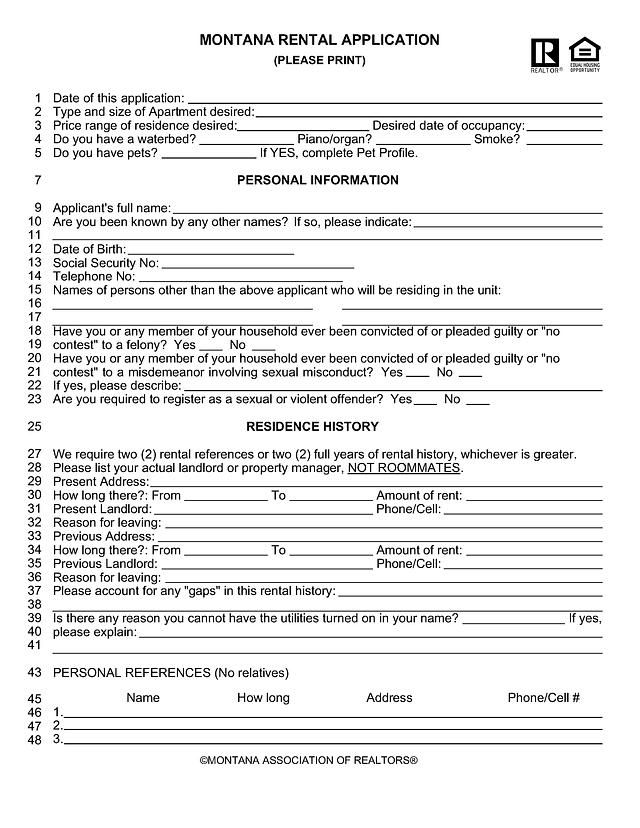
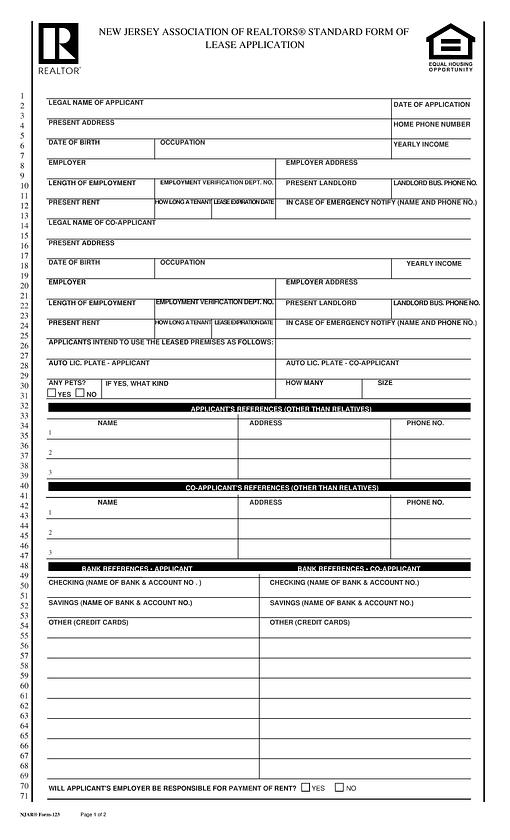
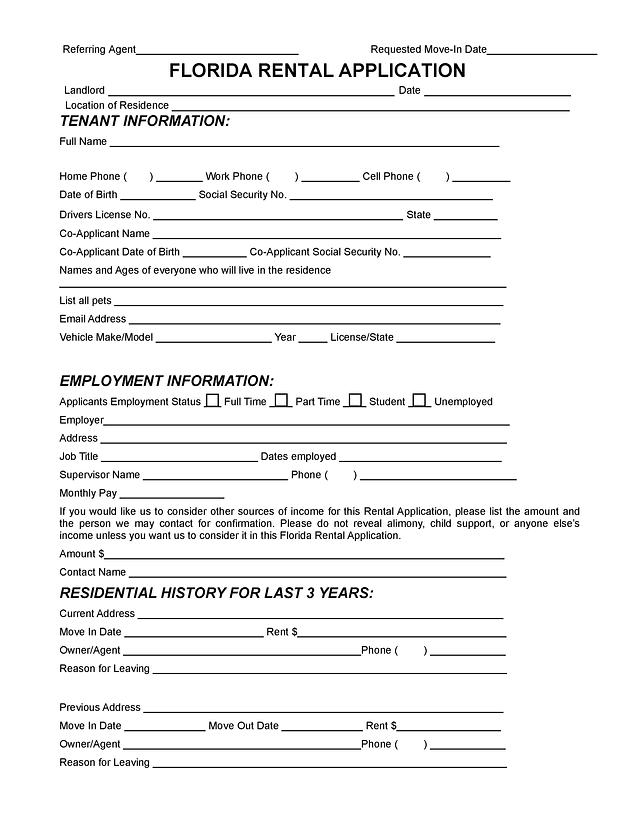
This Florida rental application is a two-page tenant application form that a landlord or property manager uses to screen someone who wants to rent a home or apartment in Florida. It covers tenant and co-applicant details, employment, three years of residential history, a short credit history questionnaire, bank and credit references, and a signed authorization for a credit and criminal history check. It is a general template, not a form issued by the State of Florida. Florida does not publish a mandatory state rental application, so landlords may use this one or their own.
Who uses it
Individual landlords, property managers, and referring real estate agents use it to collect the same information from every applicant. Renters use it to prepare a complete, legible application before a showing or to send back by email.
What to have ready
- Date of birth, Social Security number, and driver's license number and state for you and any co-applicant
- Names and ages of everyone who will live in the residence, and a list of pets
- Vehicle make, model, year, and license plate state
- Your employer's name and address, job title, dates employed, supervisor's name and phone, and monthly pay
- Your current address and up to two previous addresses from the last three years, with move dates, rent, and the owner or agent's phone
- Bank names, account types, and account numbers, and three credit references with phone numbers
For a checklist of supporting paperwork, see our guide to the documents needed for a rental application.
How to fill it out online
Click "Fill Template Now", type into each field, sign in the signature boxes on page 2, and download the finished PDF to email or print for the landlord. The walkthrough below follows the form's own headings.
Header and tenant information (page 1)
Enter the Landlord, the Date, and the Location of Residence you are applying for. Under Tenant Information, add your Full Name, home, work, and cell phone numbers, Date of Birth, Social Security No., and Drivers License No. with state. The co-applicant gets name, date of birth, and Social Security number fields. Then list the names and ages of everyone who will live in the residence, all pets, your email address, and your vehicle.
Employment information
Check one employment status (full time, part time, student, or unemployed), then fill in Employer, Address, Job Title, Dates employed, Supervisor Name and phone, and Monthly Pay. If you want other income considered, give the amount and a contact name. The form states you do not need to reveal alimony, child support, or anyone else's income unless you want it considered.
Residential history for the last 3 years
For the Current Address, give the move-in date, rent, owner or agent with phone, and reason for leaving. Each Previous Address (one at the bottom of page 1, one at the top of page 2) also asks for a move-out date. The Referring Agent and Requested Move-In Date lines sit at the bottom of page 1.
Credit history and references (page 2)
Answer five yes or no questions: bankruptcy, prior eviction, pending lawsuits, late rent in the last year, and judgments. Explain any yes answer on the line provided. Then list up to two bank references and three credit references.
Certification and authorization
The first signature block confirms that the information is true, accurate, and complete. The second, labeled Authorization, lets the landlord order your credit and criminal history and contact banks, employers, and creditors. Each applicant prints a name, signs, and dates both blocks. You can place a drawn or typed signature with our sign PDF tool.
Florida rules worth knowing
General information from the Florida Statutes, Chapter 83, Part II, as published by the Florida Legislature (checked October 2026). For your own situation, read the statute or consult a qualified professional.
- Application fees. Chapter 83 does not set a dollar cap on rental application fees. Since 2023, section 83.425 preempts local governments from regulating landlord screening, rental applications, application fees, and security deposits, so city or county fee rules do not apply.
- Security deposit amount and handling. Section 83.49 does not cap the deposit amount. Within 30 days of receiving it, the landlord must tell the tenant in writing how and where the deposit is held.
- Return deadlines. Under section 83.49(3), the landlord returns the deposit within 15 days after the lease ends if there is no claim, or sends written notice of a claim within 30 days by certified mail (or by email where the statute allows it). The tenant then has 15 days to object.
- Fee instead of a deposit. Section 83.491 lets a landlord offer an optional, nonrefundable monthly fee in place of a security deposit, with required written disclosures. The tenant can still choose a traditional deposit.
- Servicemembers. Section 83.683 requires a landlord to decide a servicemember's application within 7 days and give written notice of approval or denial, with the reason for any denial.
Because the authorization covers a credit check, federal law also applies: if a landlord rejects you based on a consumer report, the Federal Trade Commission explains they must give you an adverse action notice.
Common mistakes
- Signing only the first block and missing the separate Authorization signature
- Answering a credit history question "yes" without using the explanation line
- Listing only one previous address when you have moved more than once in three years
- Forgetting the co-applicant's signature in both blocks
- Putting annual salary in the Monthly Pay field