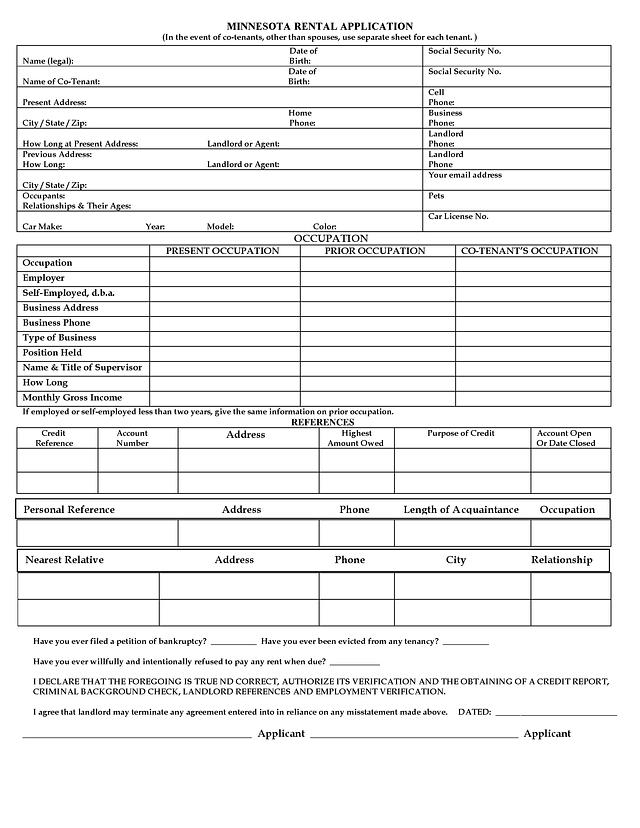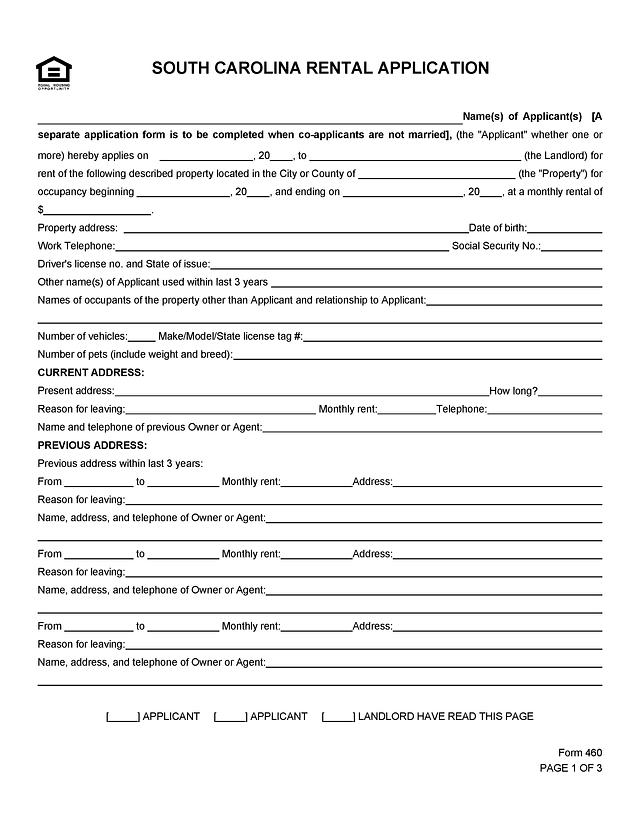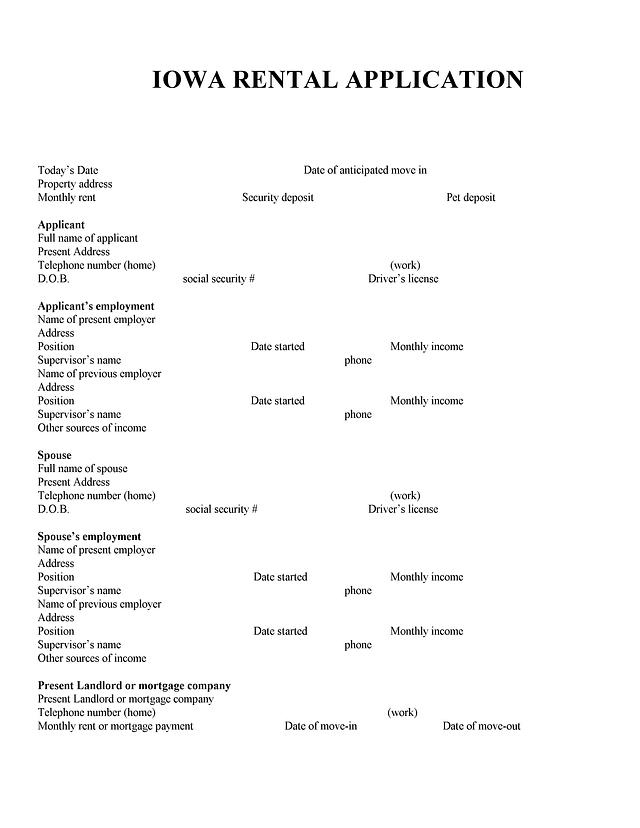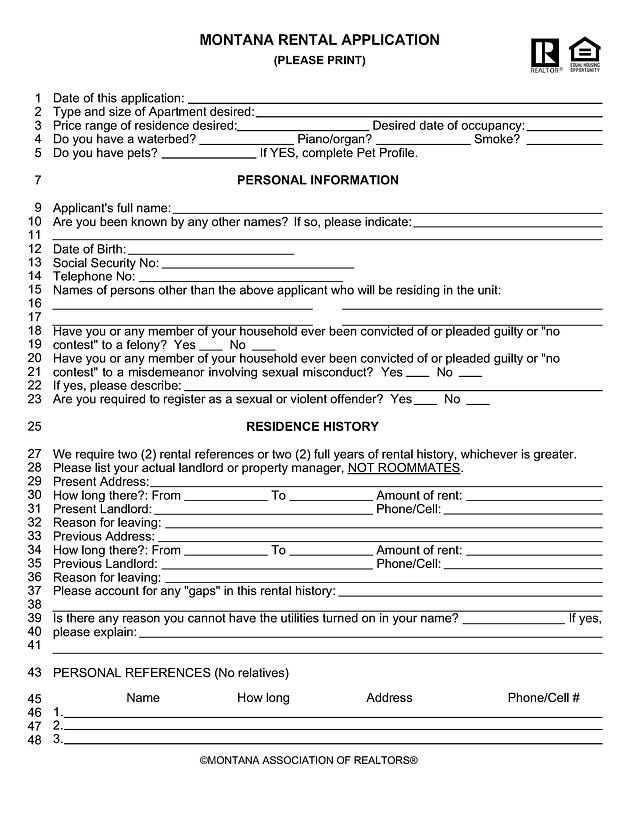
What the Utah Rental Application is
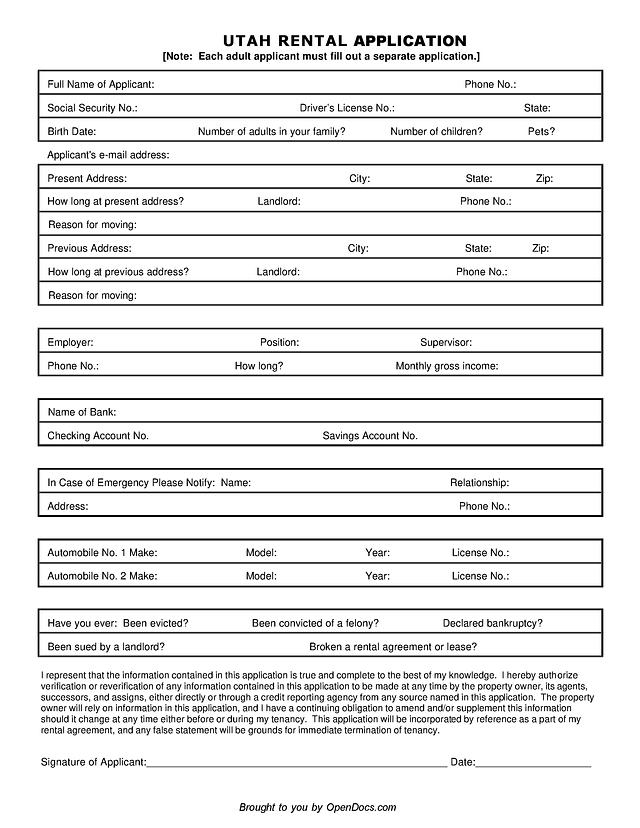
This is a one-page Utah rental application that a prospective tenant completes so a landlord or property manager can review their identity, housing history, employment, banking and background before offering a lease. It is a general template, not a form issued by the State of Utah, and a landlord may use their own application instead.
A note at the top says each adult applicant must fill out a separate application, so a couple or roommates each complete their own copy.
Who uses it
Renters applying for an apartment, house or room in Utah, and small landlords who want a short, single-page application. Because it fits on one page, it is popular with private owners renting one or two units who do not use an online screening portal.
What to have ready
- Your Social Security number, driver's license number and issuing state, and date of birth
- Your present and previous addresses, how long you lived at each, and each landlord's name and phone number
- Your employer, position, supervisor, phone number, length of employment and monthly gross income
- Your bank name and checking and savings account numbers
- An emergency contact, and make, model, year and license number for up to two vehicles
For a checklist of supporting documents, see our guide to documents needed for a rental application.
How to fill it out online
Click "Fill Template Now", type your answers into the fields, sign at the bottom and download the finished PDF. The form is short, but every block matters to the landlord.
Applicant details
Enter your Full Name of Applicant, Phone No., Social Security No., Driver's License No. and State, and Birth Date. Then answer the household questions: number of adults, number of children and pets. Add your e-mail address.
Present and previous address
For the Present Address, give the street, city, state and ZIP, how long you have lived there, your landlord's name and phone number, and the reason for moving. The Previous Address block asks for the same details. If you owned your previous home, write that in the landlord line rather than leaving it blank.
Employment and banking
The employment block asks for Employer, Position, Supervisor, phone number, how long you have worked there and Monthly gross income, meaning income before taxes. The banking block asks for the Name of Bank and your checking and savings account numbers.
Emergency contact and vehicles
List someone who will not live with you under In Case of Emergency Please Notify, with relationship, address and phone. Then fill in Automobile No. 1 and Automobile No. 2 with make, model, year and license number.
Background questions and signature
Answer the five yes or no questions: been evicted, convicted of a felony, declared bankruptcy, been sued by a landlord, or broken a rental agreement or lease. Read the certification before you sign. It says the application becomes part of your rental agreement, that you must update the information if it changes, and that a false statement is grounds for terminating the tenancy. Sign next to Signature of Applicant and add the date. If a landlord sends you their own PDF instead, you can sign it online the same way.
Utah rules on application fees, screening and deposits
The points below come from the Utah Code as published by the Utah Legislature, checked as of October 2026. They are general information.
- Disclosure before any fee. Under Utah Code 57-22-4, before an owner accepts an application fee or any other payment from a prospective renter, the owner must disclose in writing a good-faith estimate of the rent and each fixed non-rent expense, the type of each use-based expense, the date the unit should be available, and the criteria used to decide eligibility, including criminal history, credit, income, employment and rental history. The owner must also explain how you can recover money paid if the final agreement differs from those estimates.
- No statutory dollar cap. Utah's renters' deposit chapter and the Utah Fit Premises Act do not set a maximum application fee or a maximum security deposit.
- Nonrefundable deposits. Utah Code 57-17-2 says that where there is a written agreement, any nonrefundable part of a deposit must be stated in writing when the deposit is taken.
- Deposit return. Under Utah Code 57-17-3 (version effective May 7, 2025), the owner must mail or deliver the deposit balance, any prepaid rent balance and an itemized list of deductions no later than 30 days after you vacate and return possession. If the owner misses that deadline, the same section lets you send a written notice giving 5 more business days, after which a missed deadline can add a $100 penalty on top of the refund.
- Fair housing protections. Utah Code 57-21-5 prohibits rental discrimination based on race, color, religion, sex, national origin, familial status, disability, source of income, sexual orientation or gender identity, so a landlord cannot reject your application because you pay rent with a housing voucher or other assistance. This is broader than the seven classes covered by the federal Fair Housing Act.
Common mistakes
- Filling out one application for two adults. Each adult needs a separate copy.
- Writing take-home pay in the monthly gross income field.
- Leaving the time at each address blank, which makes the landlord's verification harder.
- Forgetting to update the landlord if your job or income changes before move-in, which the certification requires.