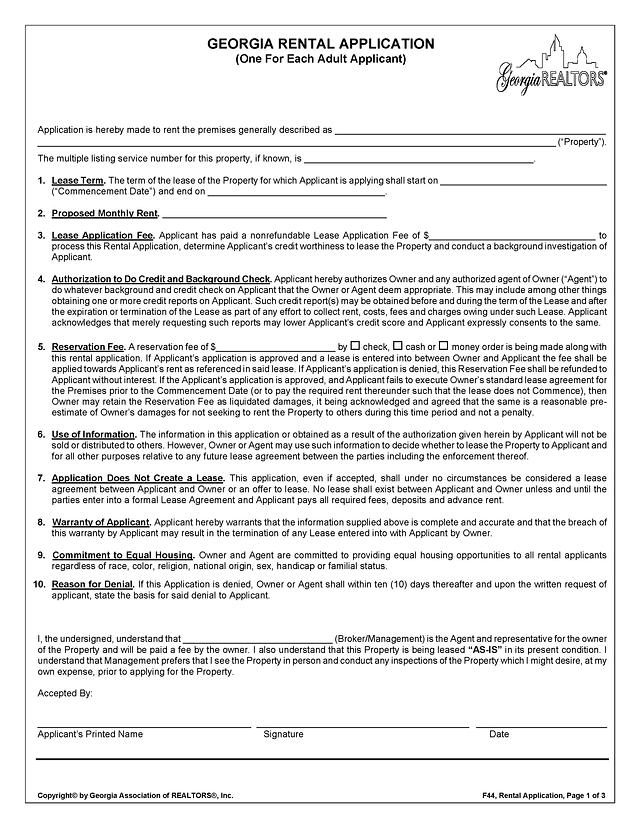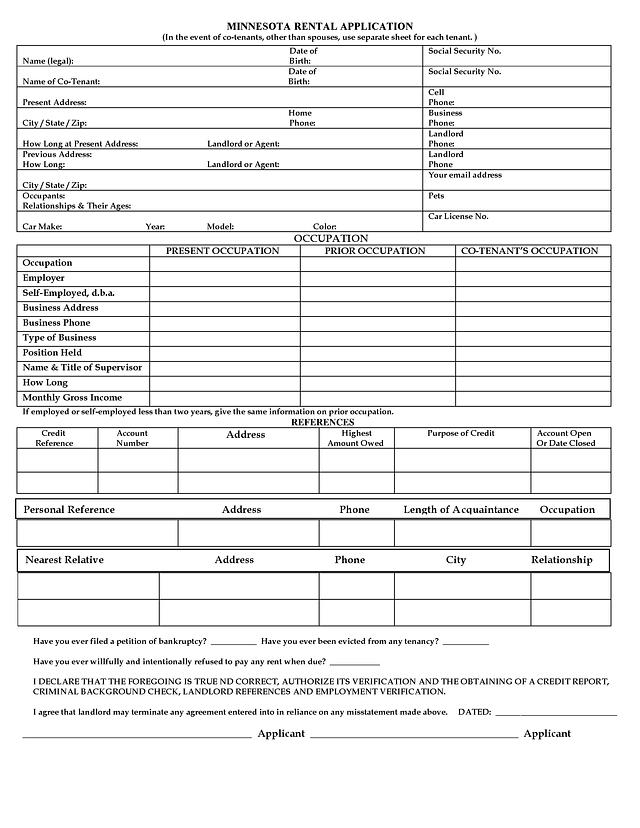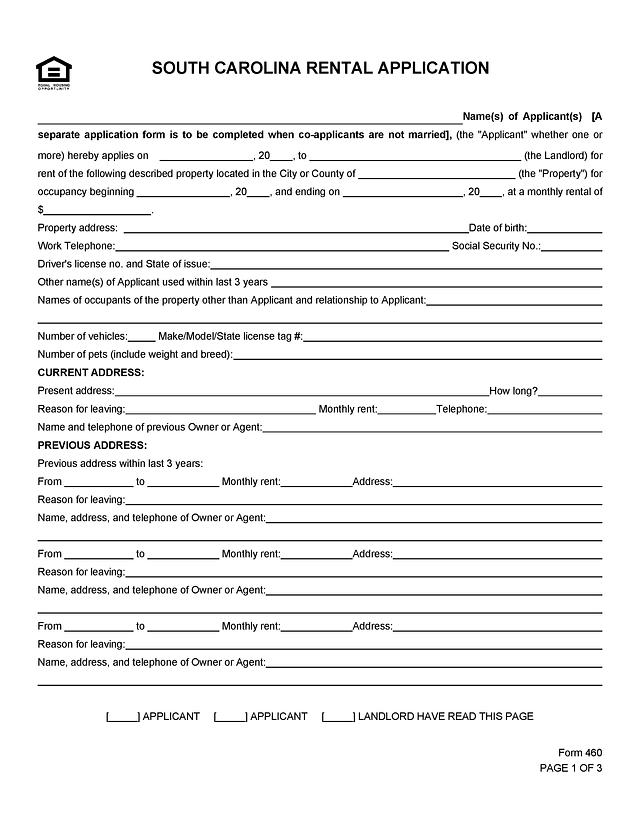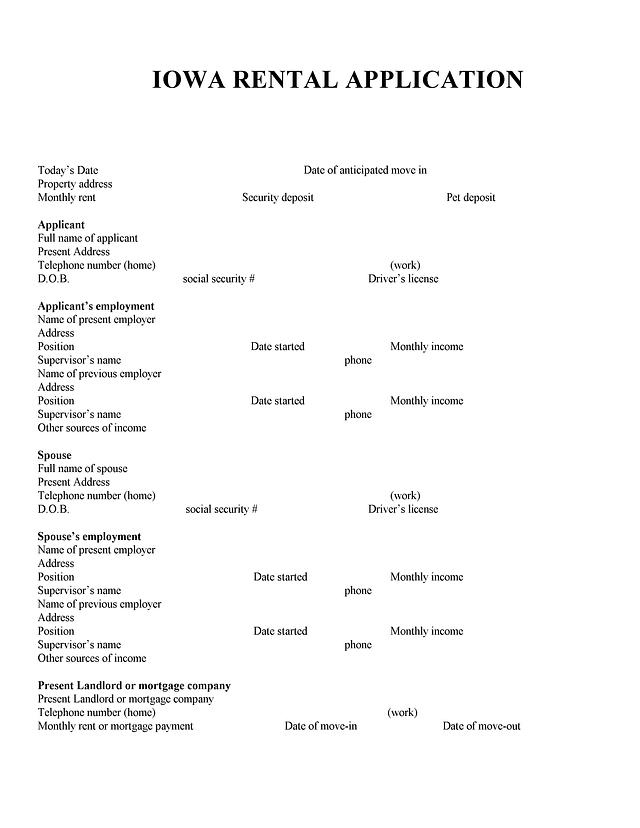
What this Tennessee rental application is
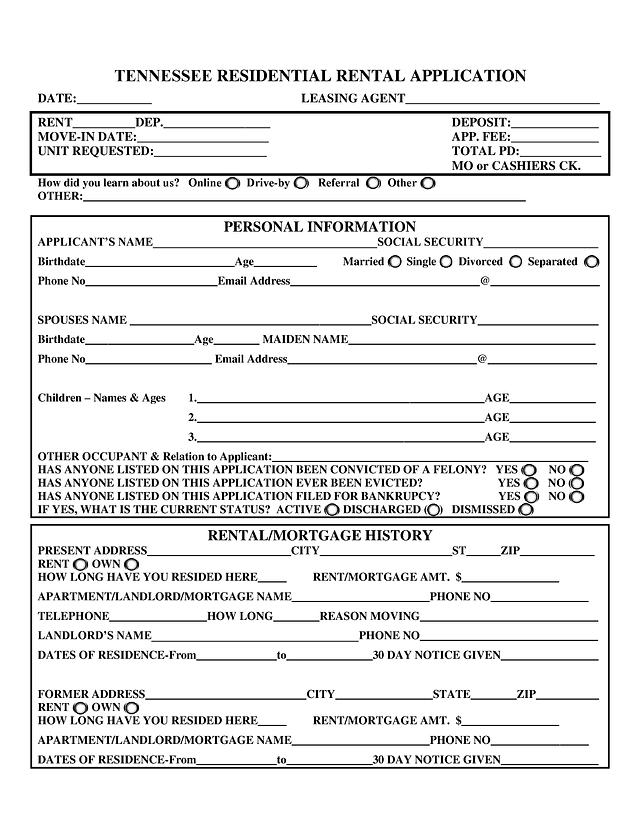
This is a five-page Tennessee Residential Rental Application template. Pages 1 to 3 are the application and its conditions, page 4 is an Employment Verification Request, and page 5 is a Rental Verification Request for your current landlord. It is a general form used by leasing offices and landlords, not a form issued by any Tennessee agency.
Who uses it
Tennessee renters applying for an apartment or house, and property managers who want a complete packet, including verification requests they can send to employers and prior landlords.
What to have ready
- Your Social Security number, birthdate, phone and email, and the same for a spouse applying with you.
- Names and ages of children and any other occupants.
- Present and former addresses with rent or mortgage amounts, landlord or mortgage company names and phone numbers, dates, and whether 30-day notice was given.
- Employer, supervisor, position, salary and start date for you and your spouse, plus previous employers.
- Bank names and branches, pet details, vehicle details, driver's license numbers, and two character references.
- A money order, cashier's check or certified funds for the application fee. The form states cash and personal checks are not accepted.
Our guide to documents needed for a rental application covers supporting paperwork.
How to fill it out online
Click "Fill Template Now," type into the fields, select the checkboxes, sign, and download the PDF to send to the leasing office.
Page 1: office block, personal information and rental history
The leasing agent fills the top: date, agent, rent, deposits, move-in date, application fee, unit requested and total paid. Mark how you learned about the property. Then enter your name, Social Security number, birthdate, age, marital status, phone and email, your spouse's details including maiden name, children's names and ages, and other occupants. Answer whether anyone on the application has been convicted of a felony, been evicted, or filed for bankruptcy, and the bankruptcy status. Under Rental/Mortgage History, give your present and former address, rent or own, how long, payment amount, landlord or mortgage company, reason for moving, dates of residence, and whether a 30-day notice was given.
Page 2: employment, bank, pets, vehicles and contacts
List your employer and your spouse's employer with supervisor, address, phone, position, salary and period, and start date, plus previous employers and dates. Add up to two bank accounts with branch, city, state and account type, up to two pets, up to two vehicles, driver's license numbers, any recreational vehicles, an emergency contact, a doctor and hospital, and two character references.
Page 3: conditions and signatures
The landlord fills in the processing charges per applicant, the security deposit amount needed to take the unit off the market, how refunds are paid, how many working days before a deposit refund, and how many days after approval rent must begin. Read these conditions closely: the processing charge is not refunded, and the deposit may be kept if you are approved and then change your mind. The paragraph on investigative consumer reports names the company to write to for details. Each applicant signs and dates. You can sign the PDF online.
Pages 4 and 5: verification requests
Fill in your name, address and your employer's or landlord's contact details, sign the authorization, and the leasing office sends each page to be completed and returned.
Tennessee rules worth knowing
General information as of October 2026. Tennessee's Uniform Residential Landlord and Tenant Act (Tenn. Code Ann. Title 66, Chapter 28) applies only in counties that meet a population threshold written into the Act, so check whether your county is covered. Where it applies:
- Application fees: the Act does not set a cap on rental application or processing fees. The amount is whatever the landlord writes on page 3.
- Security deposits: the deposit section (Section 66-28-301) does not set a maximum amount. Landlords must keep deposits in a separate account used only for that purpose at a regulated bank or lending institution, and tell the tenant where it is held when the lease is signed.
- Move-out: the tenant has the right to inspect the unit with the landlord at move-out. Any refund due must be sent before the earlier of 30 days after the tenant vacates or 7 days after a new tenant takes possession.
For advice about a specific rental, contact a qualified attorney or legal aid office.
Common mistakes
- Paying the application fee with cash or a personal check when the form requires money order, cashier's check or certified funds.
- Not noticing that the deposit paid with the application can be kept if you back out after approval.
- Leaving the "30 day notice given" lines blank.
- Forgetting to sign the authorizations on the verification pages, which delays processing.