What this LLC operating agreement is
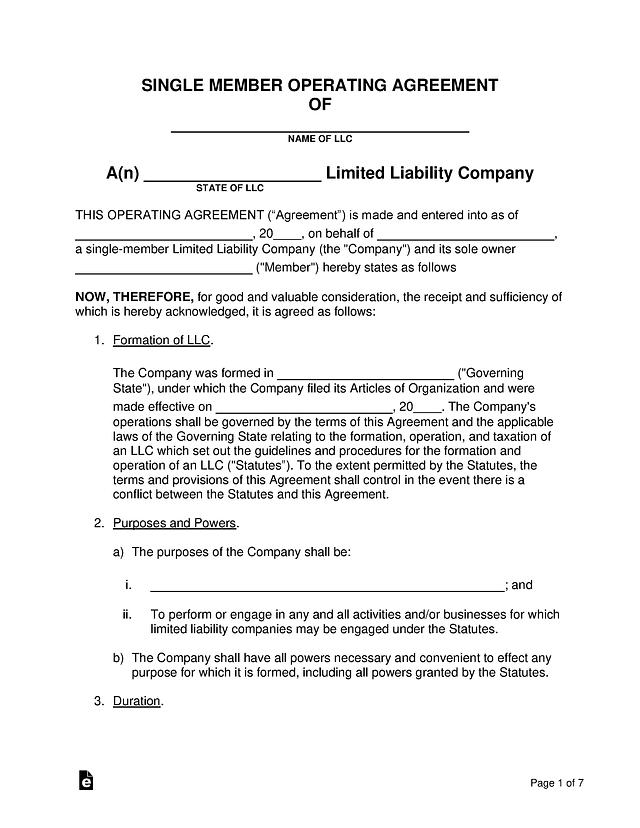
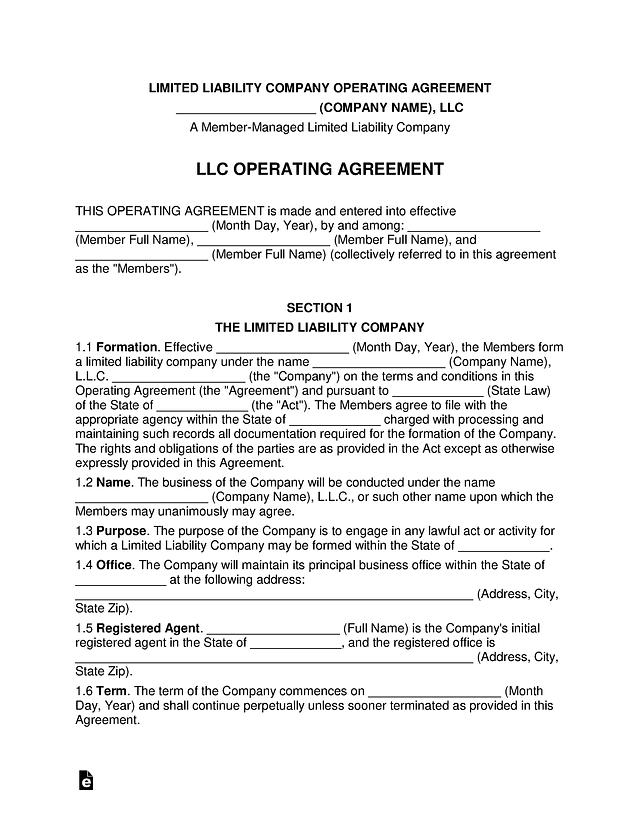
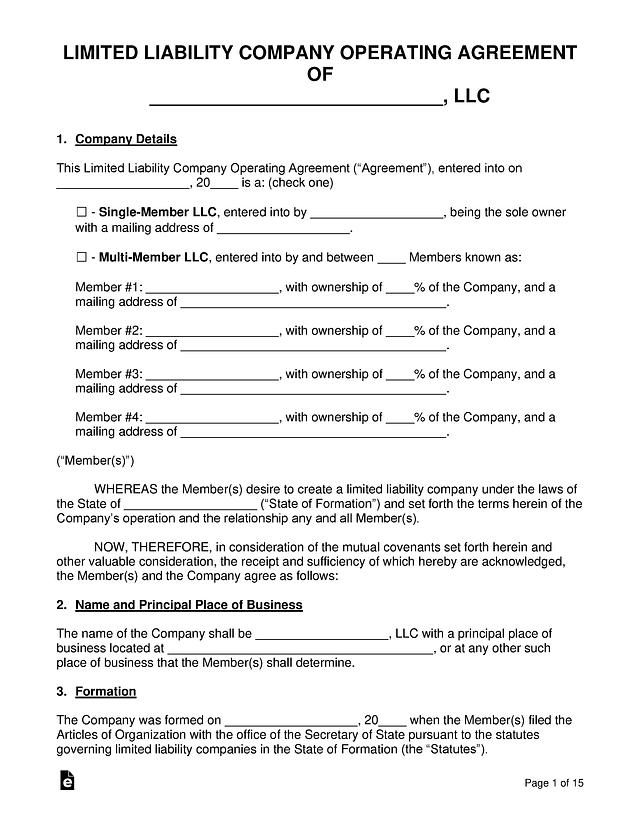
This is a 15-page limited liability company operating agreement that works for either a single-member or a multi-member LLC. It is a general private template, not a government form: no state agency issues it, and it is separate from the articles of organization that section 3 says the members filed with the Secretary of State. The agreement sets out how the company is owned, managed, and wound down, and section 14 states it is governed by the laws of the State of Formation.
The template uses one set of sections for both types. Where the rules differ, a section is split into parts marked "Applies ONLY if Single-Member" and "Applies ONLY if Multi-Member", and you follow the part that matches the box checked in section 1.
Who uses it
Owners of a newly formed LLC who want their ownership and management terms in writing, and existing LLCs that never adopted a written agreement. Banks, landlords, or partners sometimes ask to see one. The template has room for up to four members and four member signatures.
What to have ready
- The exact LLC name and principal place of business
- The State of Formation and the date the articles of organization were filed
- Each member's full name, mailing address, and ownership percentage
- Each member's capital contribution (cash, property, or services and their value)
How to fill out the operating agreement online
Click "Fill Template Now", type into the blanks, check the correct box in section 1, sign, and download the PDF. Most of the template is pre-written text, so the fields are concentrated in the first two pages and the signature page.
Section 1, Company Details
Enter the company name and the agreement date. Check either Single-Member LLC (with the owner's name and mailing address) or Multi-Member LLC (with the number of members and, for Member #1 through #4, each name, ownership percentage, and mailing address). Then enter the State of Formation.
Sections 2-4: Name, formation, and capital
Section 2 repeats the LLC name and asks for the principal place of business. Section 3 records the date the articles of organization were filed. Section 4(a) says a single member may contribute capital as they decide; section 4(b) lists each member's capital contribution and states that members are not obligated to contribute more.
Sections 5-8: Management, money, records, and dissolution
Section 5 makes the company member-managed. For multi-member LLCs, most decisions are made by members holding a majority of percentage interests, while major actions, such as selling substantially all assets, borrowing, or a merger, need unanimous consent. Section 6 covers capital accounts and the order in which profits, losses, and cash are allocated. Section 7 covers books, records, and annual reports to members within 75 days of year end. Section 8 sets out dissolution and liquidation.
Sections 9-15: General terms
These cover purpose, registered office and agent, perpetual term, and bank accounts. Section 13 holds provisions such as annual meetings, transfer restrictions, a right of first refusal with a 15-day response period, withdrawal events, AAA arbitration, amendments (multi-member), and indemnification (single-member). Sections 14 and 15 cover severability and entire agreement.
Signatures
Each member signs, dates, and prints their name on page 15.
State law varies: a few examples
LLCs are created under state law, and states treat operating agreements differently. Some examples, as of October 2026:
- New York: LLC Law section 417 says the members of an LLC shall adopt a written operating agreement, and that it may be entered into before, at the time of, or within 90 days after the articles of organization are filed.
- California: Corporations Code section 17701.02 defines an operating agreement as one that may be oral, in a record, implied, or a combination, including one with a sole member.
- Delaware: Title 6, section 18-101 defines an LLC agreement as written, oral, or implied, and says a one-member agreement is not unenforceable just because only one person is a party.
For federal taxes, the IRS LLC page explains that by default a single-member LLC is disregarded as separate from its owner and an LLC with at least two members is classified as a partnership, unless the LLC elects otherwise on Form 8832. The IRS also notes that state rules differ, so check with your state. Decisions about structure, tax elections, or unusual terms are best reviewed with a qualified attorney or tax professional.
Choosing a template
If you already know your structure, a dedicated version may be simpler: the single-member operating agreement or the multi-member operating agreement. Our single-member LLC operating agreement guide explains the one-owner case in more depth.
Common mistakes
- Checking both boxes in section 1, or filling in member details that conflict with the box checked
- Ownership percentages that do not add up to 100%
- Using a company name that differs from the filed articles
- Not keeping a signed copy with the company records