What a general power of attorney is
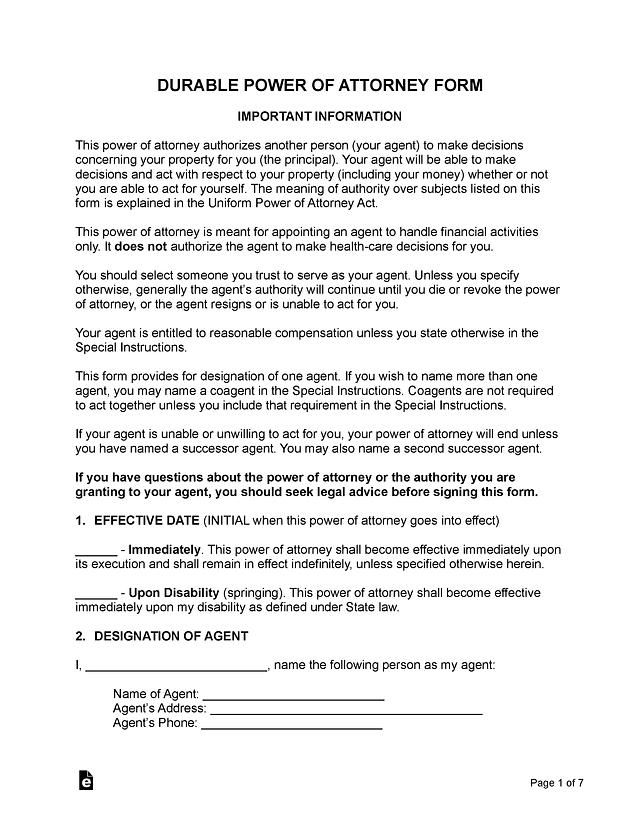
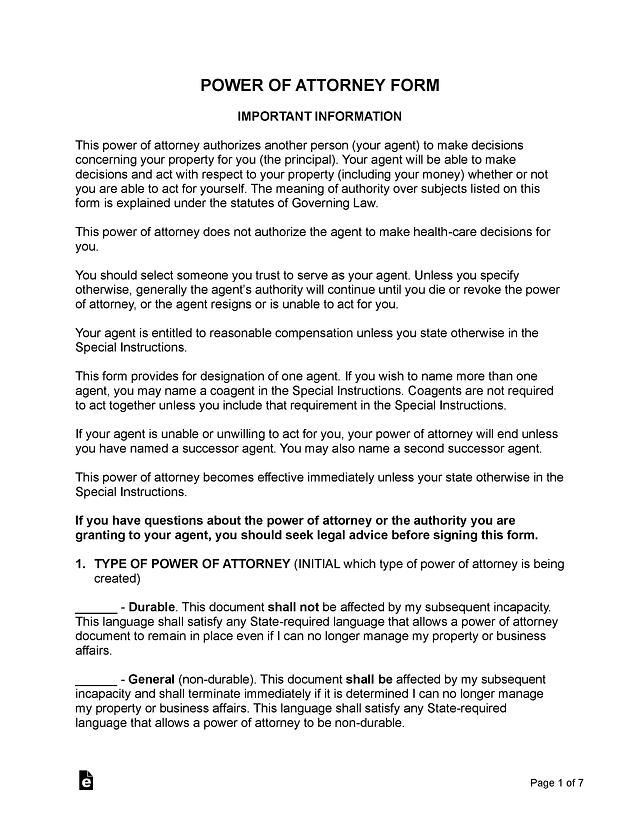
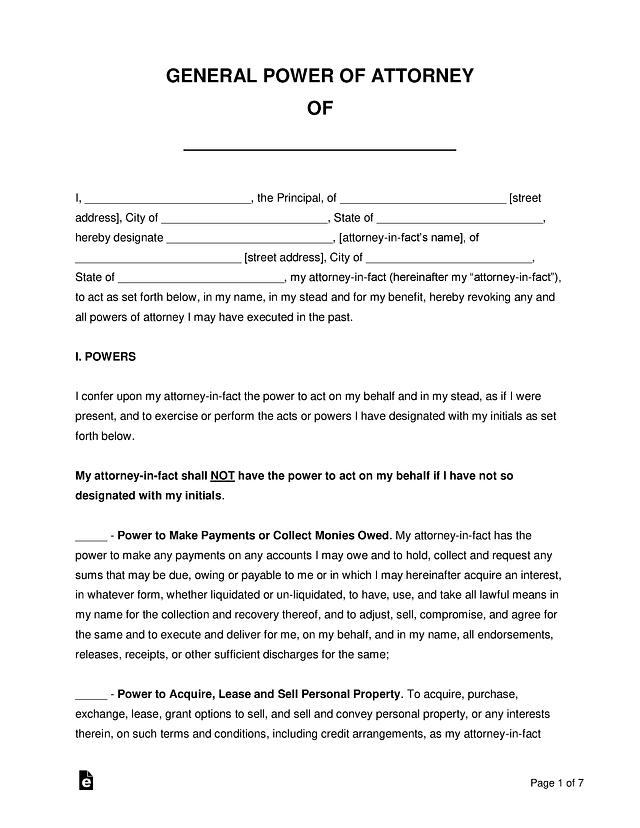
A general power of attorney gives an agent, called the attorney-in-fact on this form, broad authority over your financial and legal affairs. This 7-page template is written as a general non-durable power of attorney: Section II says it "is to be construed and interpreted as a general non-durable power of attorney", and Section III lets you end it if you become incapacitated as determined by a physician. That is the main difference from a durable power of attorney, which is meant to keep working after incapacity.
The agent can only use the powers you initial. The form states that the attorney-in-fact "shall NOT have the power to act" on any item you leave uninitialed. It is a general private template, not a form issued by a state.
Who typically uses it
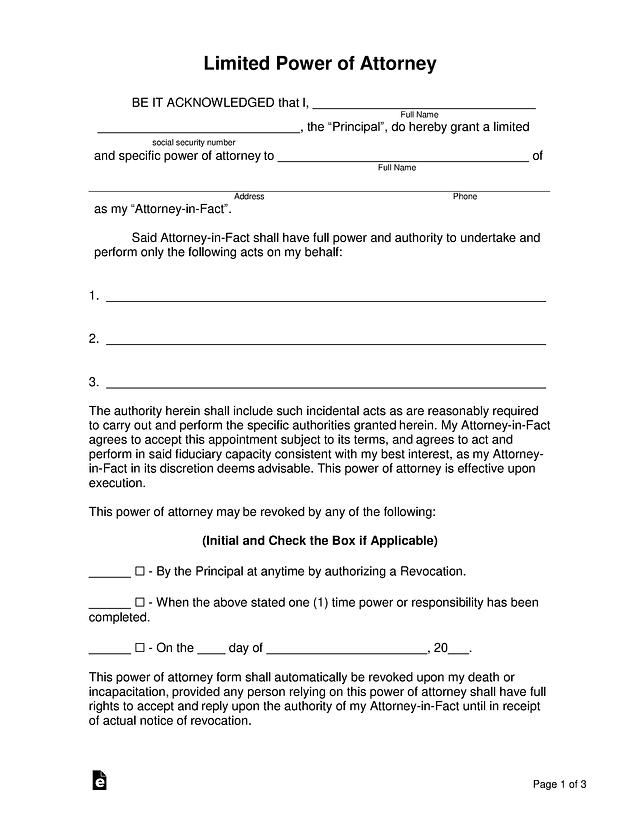
People who are competent and available but want someone else to handle their affairs for a while, for example during travel, a period abroad, a busy business stretch or a move. For a single task such as one closing or one vehicle sale, a limited power of attorney keeps the authority narrow.
What to have ready
- Your full name, street address, city and state
- The attorney-in-fact's full name, street address, city and state
- A decision on which powers to grant and whether you need an "Other" power
- The start date and the termination events you want
- Two witnesses and a notary if your state requires them
How to fill it out online with PDF Editify
Click "Fill Template Now", type into the fields, initial the powers you grant, sign, then download the PDF. Section by section:
Opening paragraph
Your name in the title line, then your name, street address, city and state as Principal, then the attorney-in-fact's name and address. The paragraph also revokes any powers of attorney you signed in the past, so review those first.
I. Powers
Initial each power you want to give: Payments or Collecting Monies Owed, Acquire, Lease and Sell Personal Property, Acquire, Lease and Sell Real Property, Management Powers, Banking Powers, Motor Vehicles, Tax Powers, Safe-Deposit Boxes, Gift Making Powers, Lending and Borrowing, Contracts, Health Care (admission to a facility and release of medical records), HIPAA, Power to Hire and Pay for Services, Reimbursement of Attorney-in-Fact, Power to Sue Third Parties, and Other, where you describe any further power.
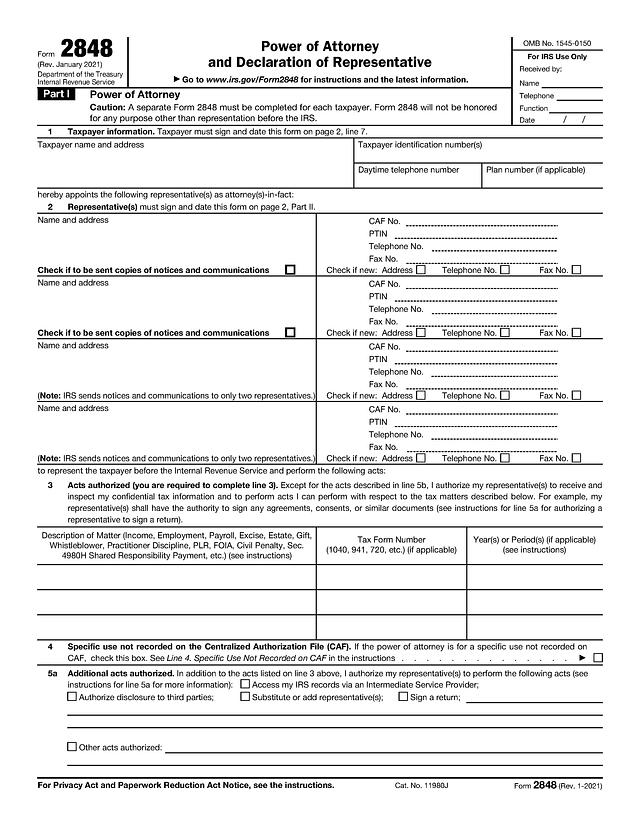
The Tax Powers item mentions completing IRS Form 2848. The IRS accepts a power of attorney other than Form 2848 if it meets the IRS requirements, but it cannot be recorded on the IRS Centralized Authorization File unless a completed Form 2848 is attached (IRS Instructions for Form 2848). A fillable Form 2848 is available here too.
II. Interpretation and Governing Law
Enter the state where you sign. This section also waives a bond for the attorney-in-fact and says photocopies have the same effect as the original.
III. Effective Date and Termination
Initial one start option: "Upon the date of this document" or a specific future date. Then initial every termination event that applies: a specific end date, a written revocation, or incapacity as determined by a physician. The first event to occur ends the document.
Signature, acceptance, witnesses and notary
You sign and print your name, the attorney-in-fact signs the Acceptance of Appointment, two witnesses sign with their addresses, and a notary completes the acknowledgment.
State rules to check
Execution rules and default durability vary by state. Examples as of October 2026:
- New York treats a power of attorney as durable unless it expressly says it ends on the principal's incapacity (N.Y. Gen. Oblig. Law 5-1501A), and it sets its own wording and signing rules for financial powers of attorney.
- California requires the date of execution and either a notary acknowledgment or two qualified witnesses (Cal. Prob. Code 4121).
- Florida treats a power of attorney signed in another state as valid if it complied with that state's law when it was signed (Fla. Stat. 709.2106).
Some states require a statutory form for financial powers of attorney. Check whether your state has one before relying on a general template, and get legal advice if you are unsure which powers to grant.
Common mistakes
- Expecting a non-durable document to keep working after incapacity
- Forgetting that the opening paragraph revokes earlier powers of attorney
- Initialing Gift Making Powers without reading what they allow
- Leaving the start date or termination choices blank
- Skipping the attorney-in-fact's acceptance signature